
Summary
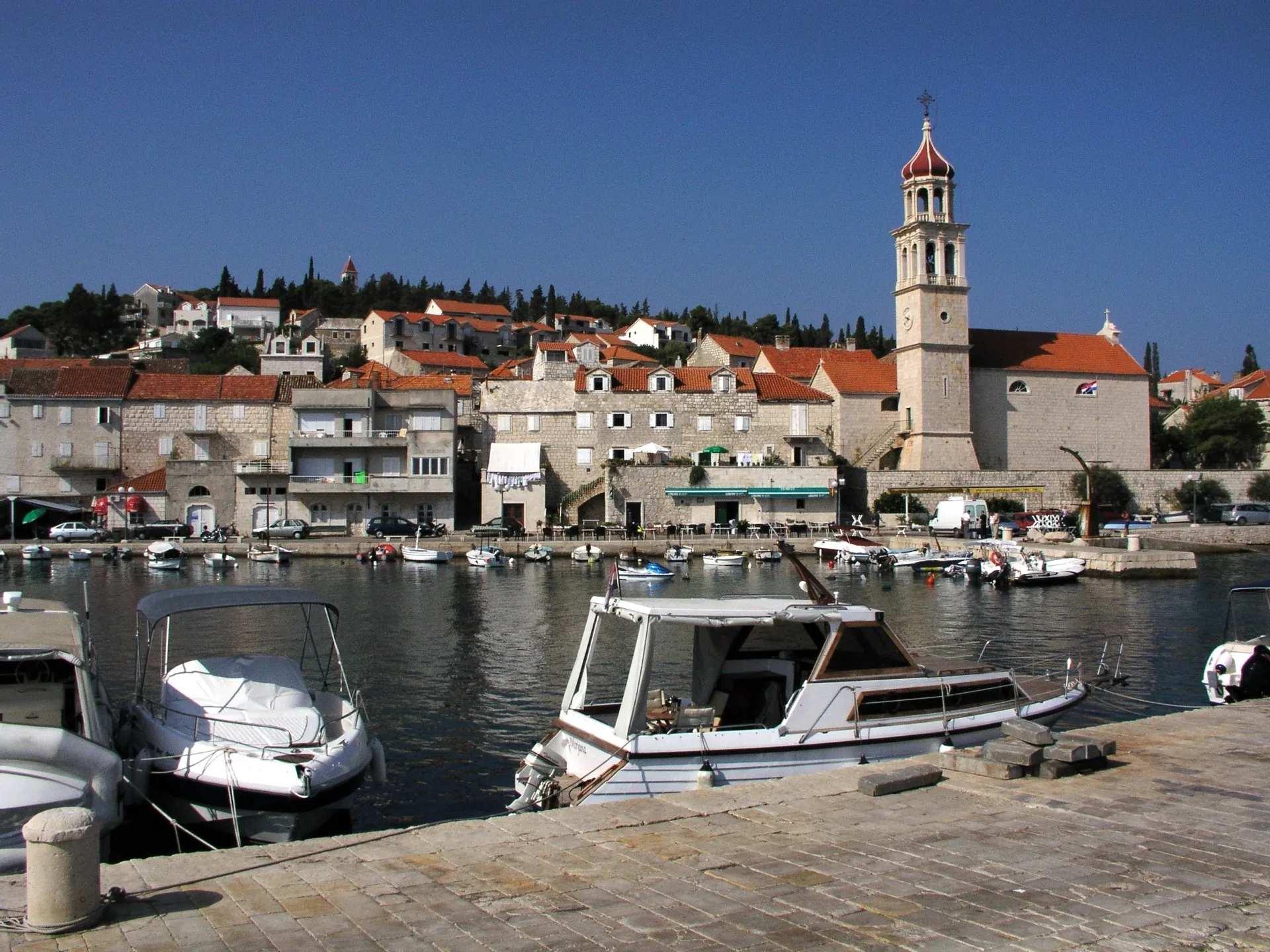
Sutivan, known locally as Stivan, is a harbour on northwestern Brač. The Church of St John gave it its name, while seafaring families, agriculture and cultural societies shaped the later community.
The place name preserves the memory of St John and the older sanctuary at Bunta.
Name and older coastal landscape
St John on Bunta and the remains of an Early Christian basilica are key to understanding the name Sutivan, or Stivan. Today’s settlement grew in importance in the late 15th and early 16th centuries as people moved from the island’s interior and the mainland. The older sanctuary and the later village are different layers of the same place.
Parish, cemetery and mother village
The Church of the Assumption of Mary (crkva Uznesenja Marijina) is the centre of the independent parish, formed when it separated from Donji Humac in 1579. St Roch by the cemetery belongs to the community’s votive and burial history. Routes towards Donji Humac bear witness to the older connection between the coast and the people of the interior.
Houses, summer residences and economic strength
Kaštel Marijanović shows the defensive and residential sides of the harbour. Ilić Courtyard, a family residential complex, and the Kavanjin summer residence speak to landowning and cultural ties, while the Ilić windmill was used to process grain. These buildings did not all serve the same purpose; together they reveal the range of work and living conditions of coastal families.
Reading, community groups and emigration
Vines, olives and fishing long sustained the town; the crisis in viticulture contributed to emigration. In the 19th century, reading rooms were places of cultural and political gathering. The history of Sutivan can also be traced through books, associations and emigrant ties, alongside its surviving stone buildings.