
Summary
The Church of St John at Bunta was built within the foundations of a 6th-century Early Christian triconch basilica. The Mostir site is also associated with the origin of the name Sutivan, or Stivan.
Protected cultural property Z-5001; the present chapel uses the older basilica's south wall, which survives up to roof level.
History and purpose
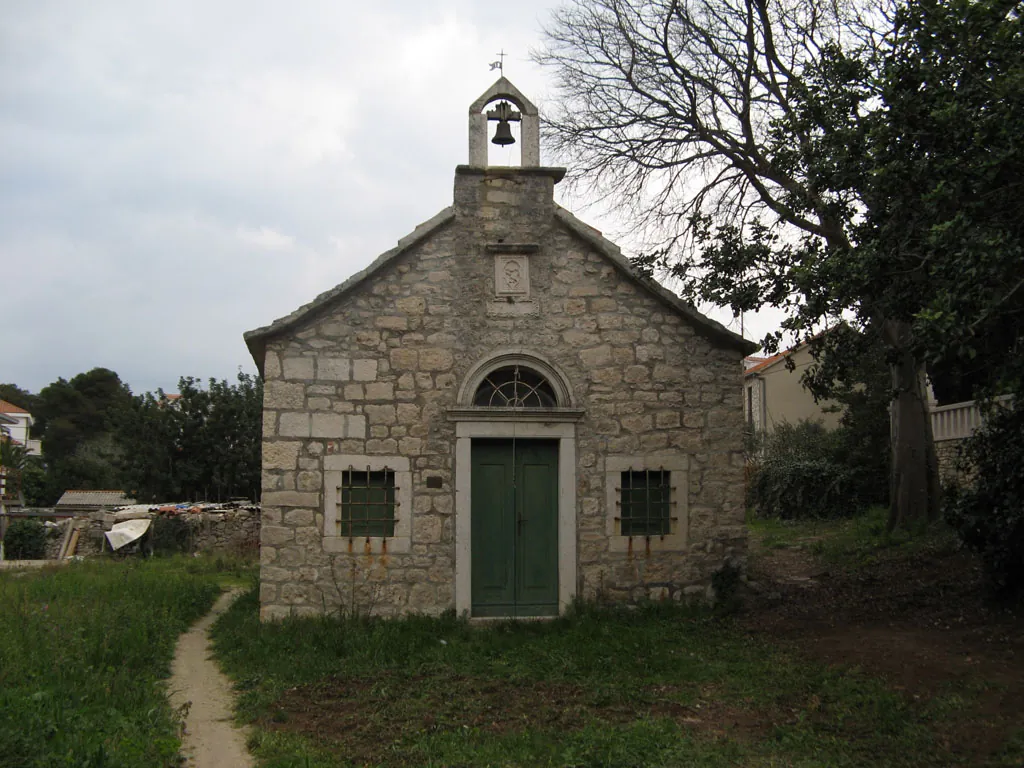
The Church of St John in the Bunta area was built at the Mostir site, within the remains of a 6th-century Early Christian triconch basilica. This older sacred layer matters to Sutivan's history: public sources link the dedication to St John, Sanctus Iohannes, with the origin of the names Stivan and Sutivan.
Structure and traces of the past
The present single-nave chapel with a square apse incorporates the older basilica's south wall, articulated by pilaster strips and preserved up to roof level. The façade bears an inscription with the coat of arms of Jerolim Natalis, a canon of Split, dated 1655, and the interior has a barrel vault. The sanctuary contains a three-part wooden altar carved with the initials GNCS and the year 1649.
Access and visiting
The site is east of Sutivan harbour. The map is an approximate guide to Bunta; before visiting, check whether entry is possible, the site's condition and the rules for visiting the archaeological remains.