
Summary
Pučišća is a harbour and stoneworking centre on the northern coast of Brač. Fortified houses, churches and the Stonemasonry School connect the coastal settlement’s need for security with work in stone and the passing on of knowledge.
In Pučišća, stone is at once an economic resource, a building material and a skill taught at school.
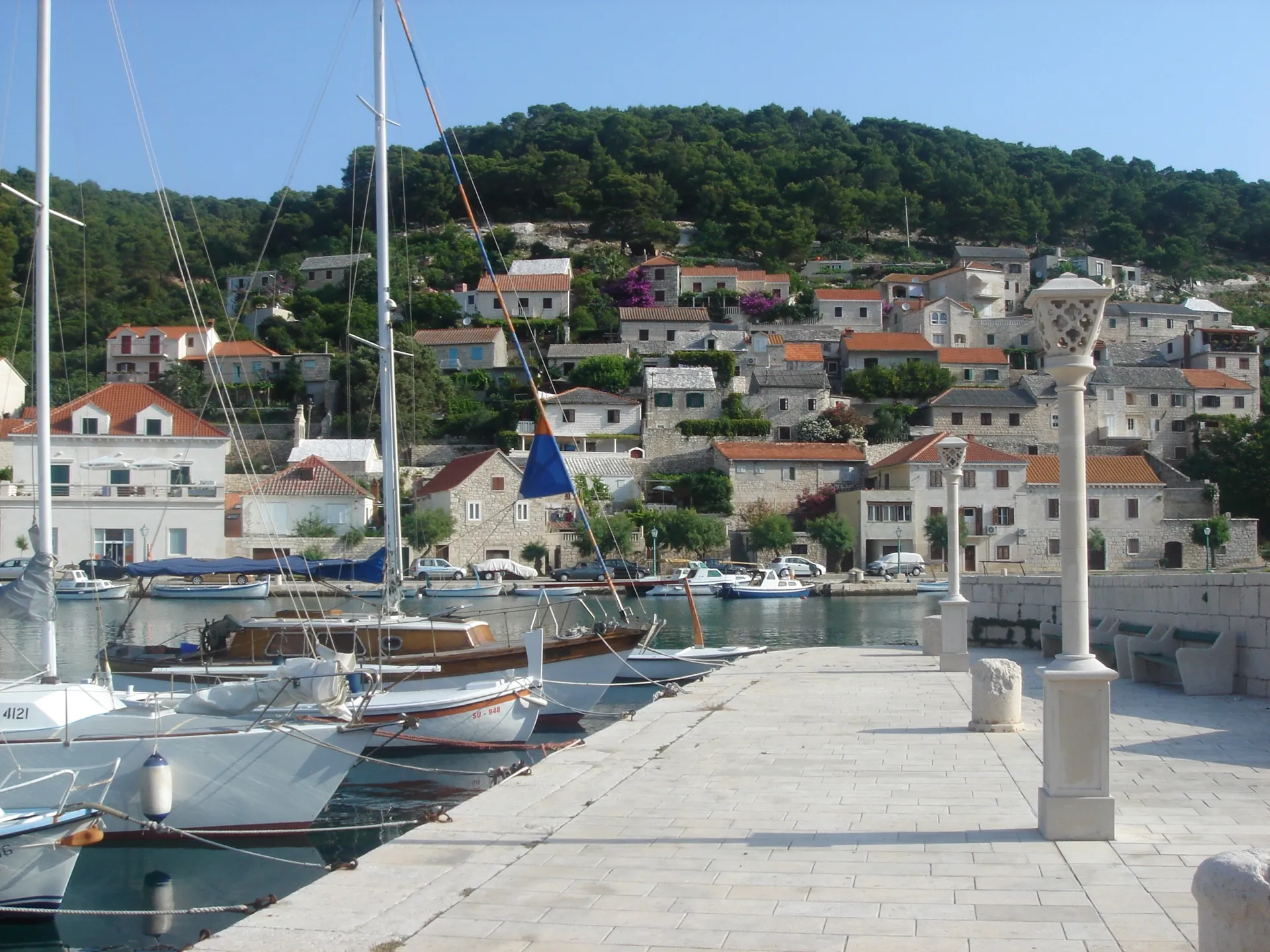
A settlement of fortified houses
Pučišća developed in the second half of the 15th century beside a deep bay. Settlement from nearby inland areas went hand in hand with the construction of towers to guard against attacks from the sea. Kaštel Žuvetić is associated with the beginning of this building history; a series of other towers gave the settlement its distinctive defensive character.
Kaštel Cicarelli is one of the surviving separate fortified complexes in the harbour centre.
Churches in the two branches of the bay
The Parish Church of St Jerome (župna crkva sv. Jeronima) is the centre of the later coastal parish. The Church of St Stephen and Our Lady of Consolation (Crkva sv. Stjepana i Gospe od Utjehe), in the cemetery grounds, preserves a different, older sacred layer, while Stipanska Luka has remains of an Early Christian sanctuary. These sites should not be conflated simply because they share the name St Stephen.
The Stonemasonry School and working in stone
The Stonemasonry School was established in 1909, building on local industry and craft. Its history distinguishes earlier courses from the start of the permanent institution. Handworking stone brings together material, drawing, tools and experience; the school passes on skills that shaped the houses, churches and public spaces of the town.
Sources: [3]
Written heritage and neighbouring settlements
The Povlja Charter of 1250 comes from the monastic history of Povlja and is kept in the parish office in Pučišća. This specific connection links the two communities through a historical document. Pražnica, meanwhile, was the mother parish from which the Pučišća community separated in 1566.