
Summary
Povlja is a settlement on the branching bay in northeastern Brač. Its Early Christian basilica, Benedictine heritage, fishing and agriculture connect its history with the sea and the land around it.
The Povlja threshold inscription and charter preserve the names, language and relationships of a medieval island community.
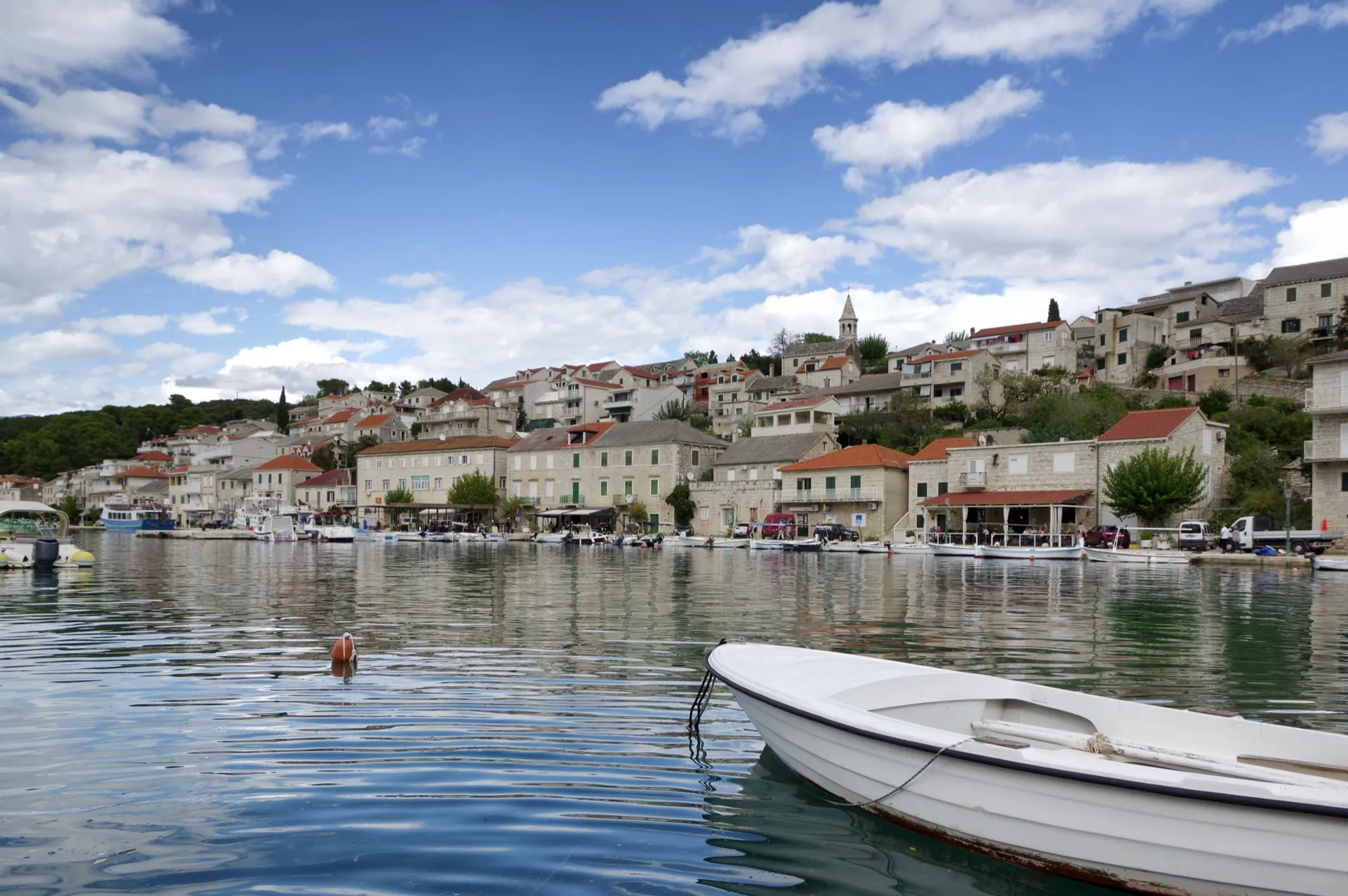
The bay and the settlement
Povlja lies in the eastern part of a branching bay. Ancient remains and a sacred complex predate the early modern village. The sea, the land and the sheltered coast together help explain the development of a community whose life relied on fishing, agriculture and stoneworking.
Basilica, baptistery and monastery
St John the Baptist and the Benedictine complex preserve especially important Early Christian remains, including a baptistery. A Benedictine community later settled in this area. Alterations and defensive elements show how the sanctuary adapted to different historical circumstances, rather than being built all at once without change.
Documents that connect the island
The Povlja Charter of 1250 confirms earlier monastic land arrangements, including provisions dating from 1184. Written in Croatian Cyrillic, it preserves important linguistic and legal material. Today it is kept in Pučišća, so a single document connects its origins in Povlja with another parish on Brač.
Sources: [3]
Work, memory and local traditions
Alongside fishing, vines, olives and stonework were important. St Joseph at the cemetery is part of the community’s family memory. Traditions about St John of Povlja belong to local spiritual culture and should be distinguished from archaeological finds and information preserved in documents.