
Summary
Selca is the centre of eastern Brač, strongly shaped by stonemasonry. It grew from shepherds’ dwellings into a settlement of stoneworkers, public monuments and cultural gatherings.
Selca’s churches, palaces and monuments connect the work of stonemasons with the history of the community.
From shepherds’ dwellings to a settlement
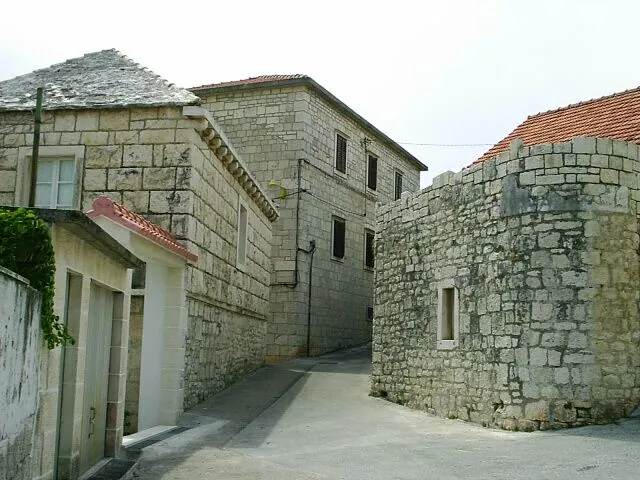
Selca developed from shepherds’ dwellings and small family groups. The settlement’s growth at the turn from the 17th to the 18th century is linked to migration from the surrounding area and the development of stoneworking. Podsmrčevik and other hamlets around Selca preserve a rural way of life distinct from the denser centre that developed later.
Stonemasons and the built centre
The Church of Christ the King (crkva Krista Kralja) on the Pjaca shows what local stonemasons could achieve in monumental construction. The older Church of Our Lady of Mount Carmel (crkva Gospe od Karmela) belongs to an earlier period of parish life. The Štambuk family palace (Palac obitelji Štambuk), built in 1869, is a different kind of commission: a large merchant family home with carefully executed stone details.
Monuments and cultural gatherings
Tolstoy Park connects Selca with literature, the stonemasonry school and cultural gatherings. The Park of Gratitude and the monument to Stjepan Radić belong to other periods of public commemoration. Together, they show how residents expressed cultural and political identities through sculptures and designed public spaces.
Destruction and rebuilding
The burning of Selca in 1943 left a deep mark on its houses and family memory. The Palac is one visible reminder of the destruction. The village’s history therefore includes both loss and rebuilding, alongside the continuation of stonemasonry that had already shaped its identity.