
Summary
Postira is a harbour on northern Brač whose history is linked to Dol, fishing, fish processing and agriculture. Early Christian sites nearby and the house where Vladimir Nazor was born extend the story beyond today’s waterfront.
Migration from Dol and the growth of the harbour economy are key to understanding Postira.
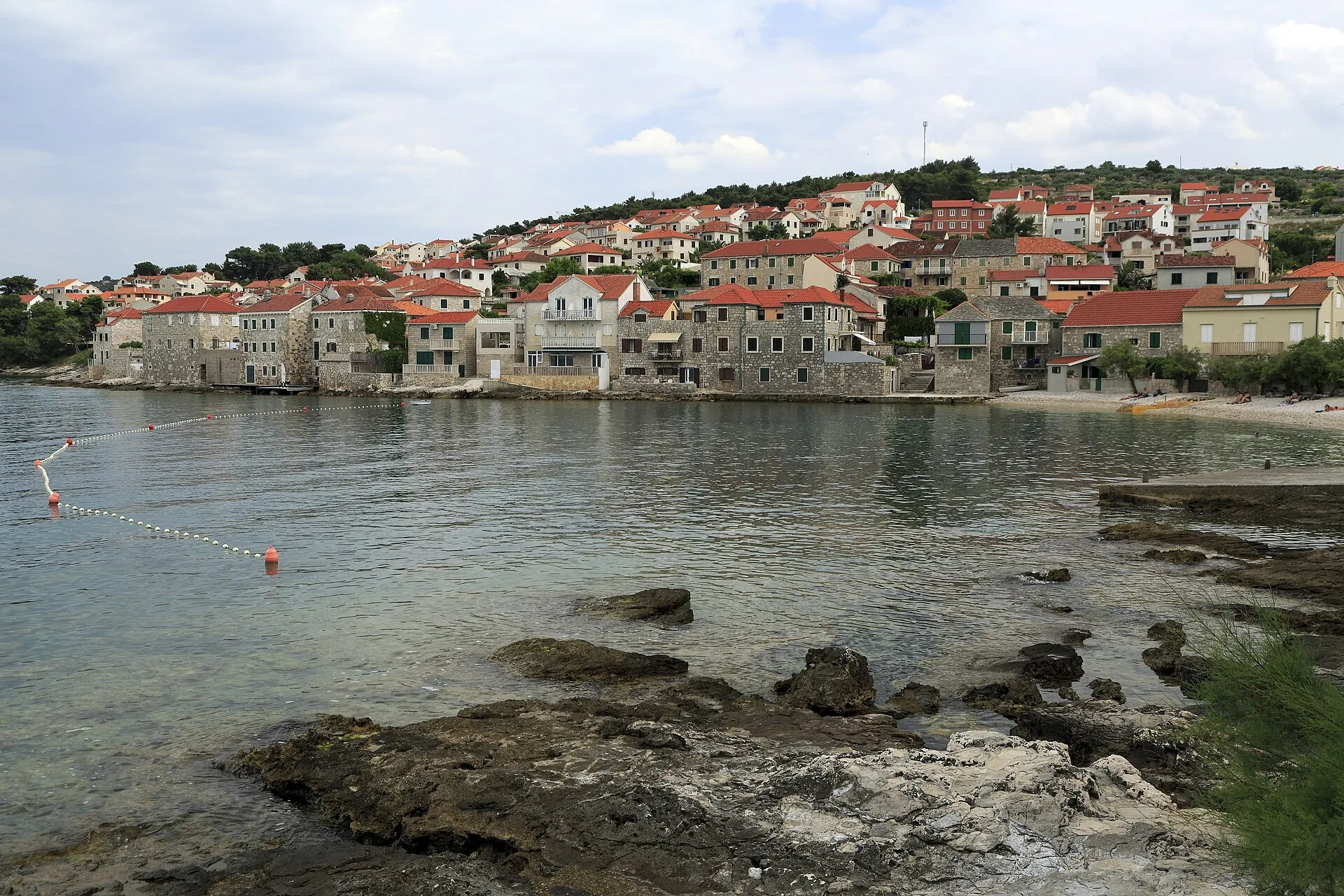
From Dol’s harbour to a settlement
Postira began to take shape in the early 16th century as people moved from Dol and later from the mainland. The harbour is mentioned before a permanent coastal community developed. The connection with Dol remained important after Postira became an independent parish: the inland village and the seaside landing place are part of the same history of people and goods in motion.
Parish centre above an older basilica
The Church of St John the Baptist (crkva sv. Ivana Krstitelja) stands on the site of an Early Christian basilica. The later church also has defensive features, built during a period of insecurity along the coast. Mirje and Lovrečina nearby reveal other Early Christian complexes, though they should not be considered parts of today’s village.
Work by the sea and in the fields
Fishing and fish processing, including a factory founded in 1907, strongly shaped the settlement. Olive groves, vineyards, stoneworking and other crafts connect the coast with the hinterland. Postira therefore remains a place to live and work beyond the tourist season.
Nazor and the memory of the coastal houses
The house where Vladimir Nazor was born is in the historic centre, in a complex associated with the Lazanić family. Nazor’s birth in Postira and his childhood in Bobovišća na Moru are two distinct points in his biography. The house makes it possible to encounter literary history in the real setting of the town.